Apollo Clinical Intelligence Engine (CIE)
An AI-powered clinical knowledge system that helps users check symptoms and understand potential health conditions anytime.
Category
Healthcare
Client
Apollo 247
Date
Designing an AI-powered clinical knowledge system that powers symptom diagnosis and care guidance.
The Clinical Intelligence Engine (CIE) powers Apollo 247’s symptom checking experience. It translates medical knowledge created and validated by doctors into a scalable digital system that helps users understand symptoms and discover the right care.
By structuring clinical reasoning into an intelligent system, CIE bridges the gap between medical expertise and digital healthcare guidance.
The problem
Millions of people search symptoms online before consulting a doctor. However, most symptom checkers provide unreliable results, generic guidance, or overwhelming information.
Users needed a system that could:
• understand symptoms accurately
• ask relevant follow-up questions
• evaluate possible conditions clinically
• guide them toward the right care
The challenge was to design a system that could translate doctor expertise into a structured, scalable diagnosis experience.
My role
Product Designer
I worked closely with doctors, product managers, and engineers to design both the clinical knowledge system and the symptom checker experience.
Responsibilities included:
• designing the symptom checker experience
• structuring the clinical knowledge model
• collaborating with doctors to validate diagnosis logic
• designing interfaces for knowledge creation and validation
• defining workflows for clinical reasoning
Understanding clinical diagnosis
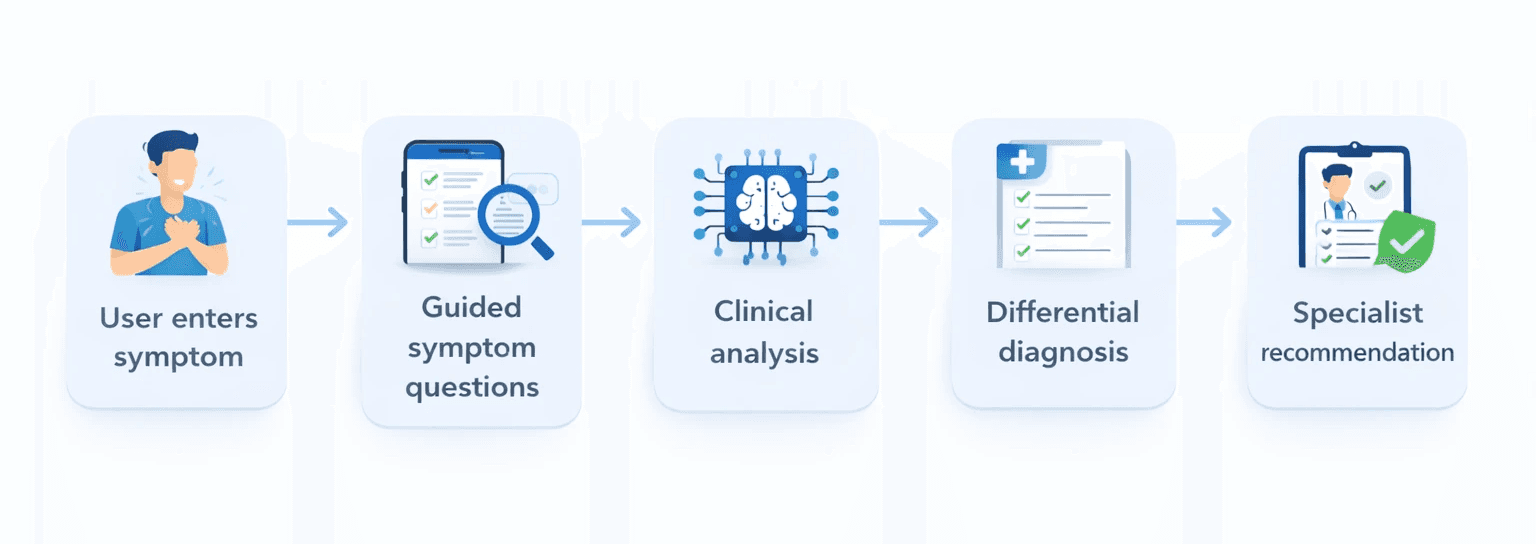
Doctors diagnose symptoms through a structured reasoning process. To design an effective system, we studied how doctors evaluate symptoms during consultations.
Typical diagnosis flow:
Patients describe symptoms
Doctors ask guided follow-up questions
Possible conditions are evaluated
Differential diagnosis narrows outcomes
The patient is guided toward the right care
Designing the clinical knowledge system
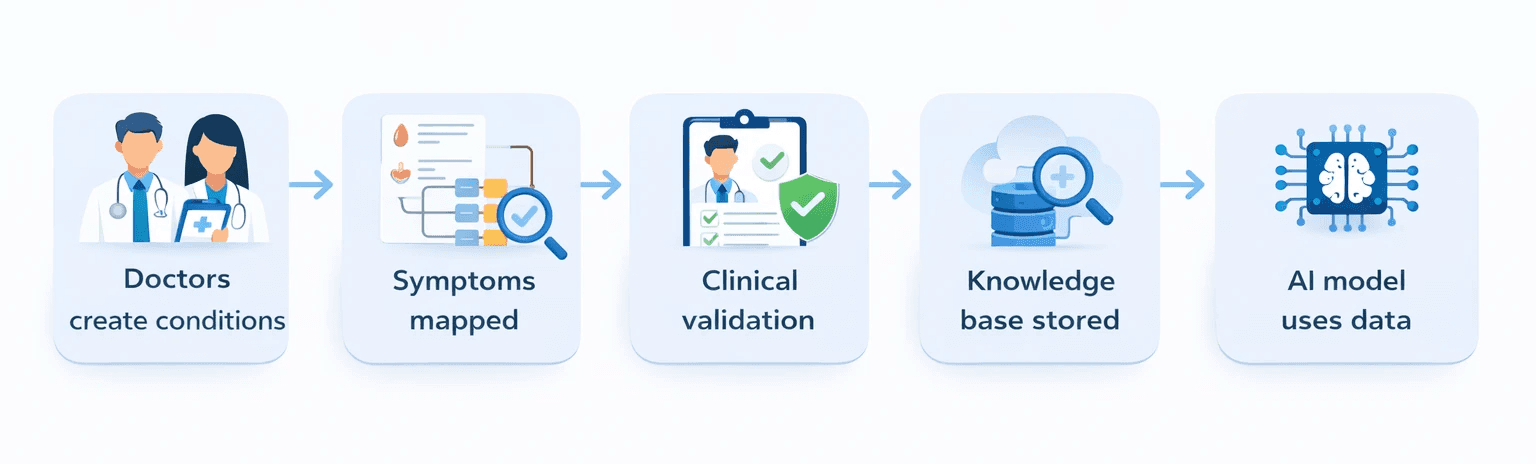
To make diagnosis scalable, we created a doctor-curated clinical knowledge base.
The knowledge base captures relationships between:
• symptoms
• conditions
• follow-up questions
• severity indicators
• specialist recommendations
Doctors define and validate these relationships to ensure medical accuracy before the data powers the diagnosis engine.
Product architecture
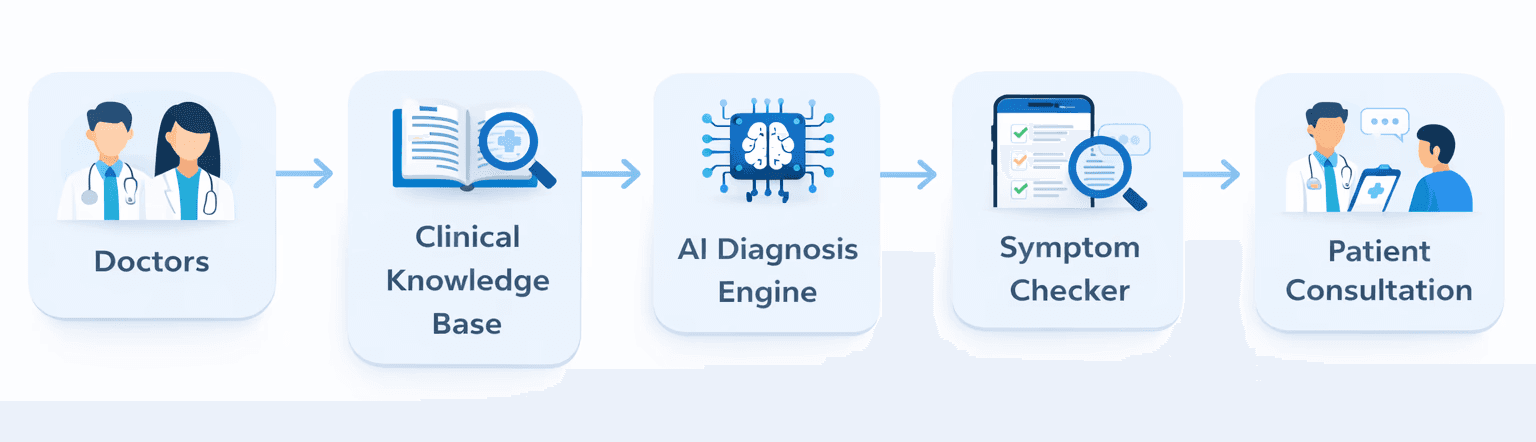
The platform was designed with three layers.
Knowledge layer
Doctor-curated medical data.
Decision engine
Algorithm evaluating symptom combinations.
Experience layer
User-facing symptom checker interface.
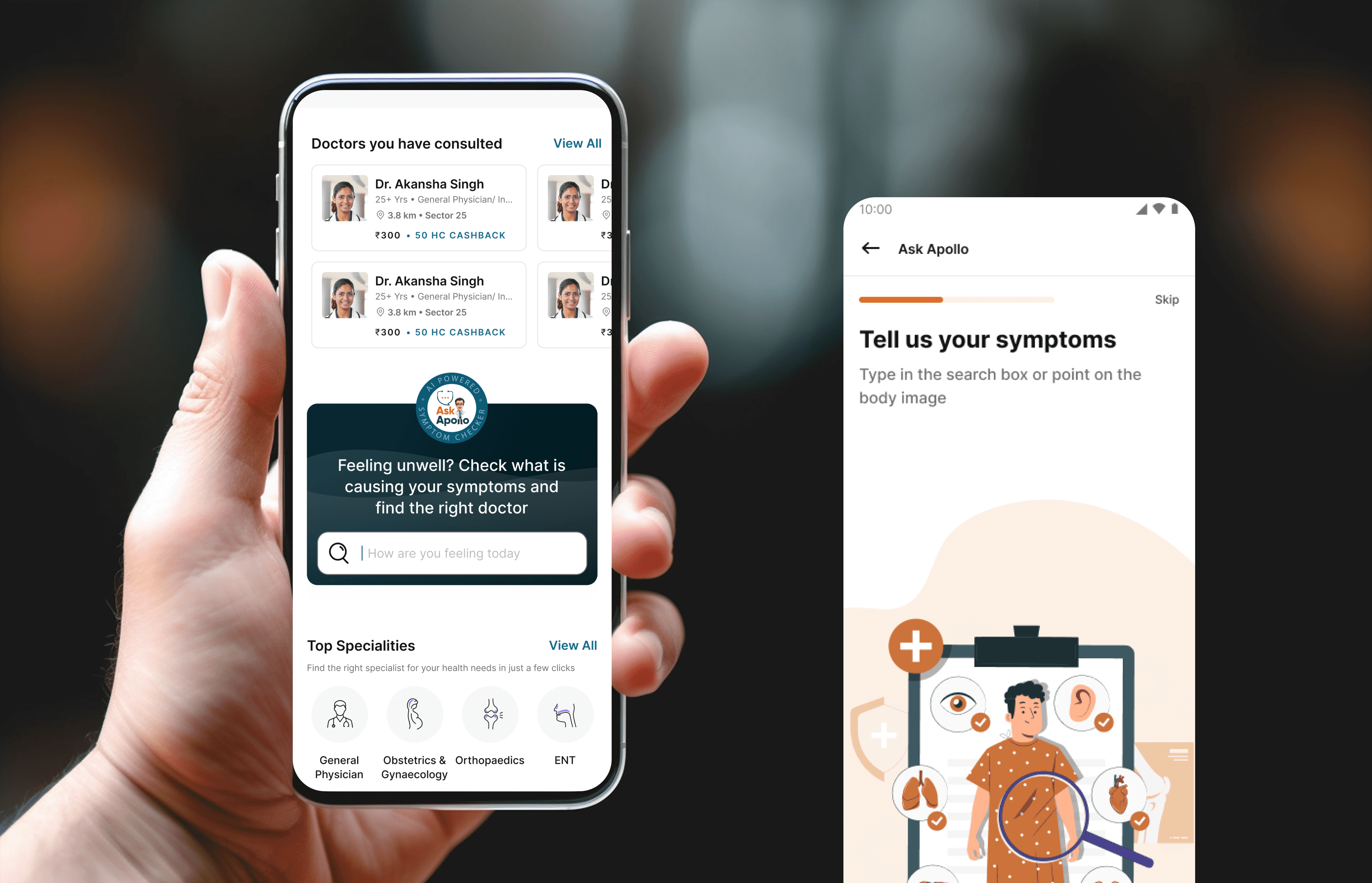
Designing the symptom checker experience
The symptom checker was designed to guide users through a structured clinical reasoning process while keeping the interaction simple and reassuring.
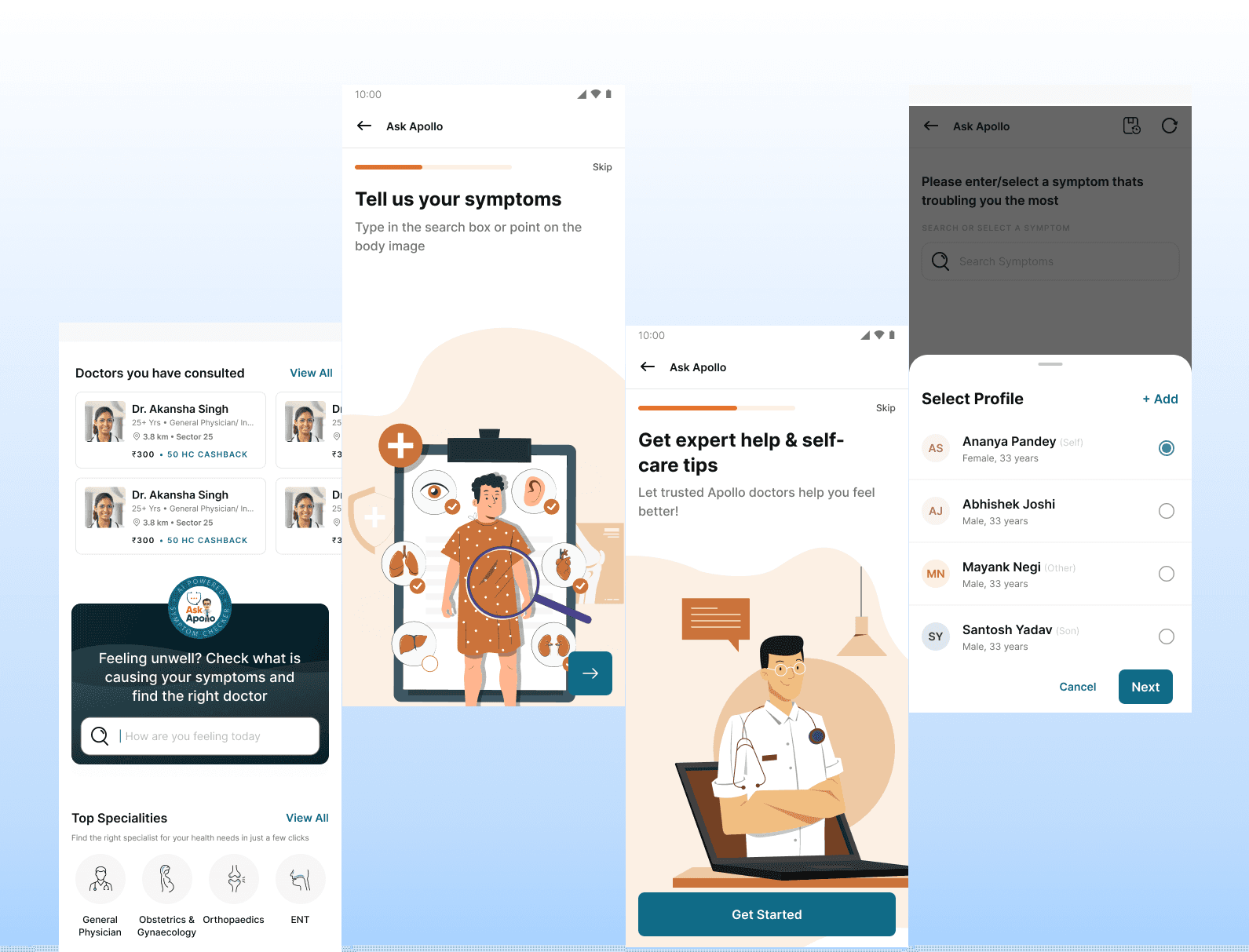
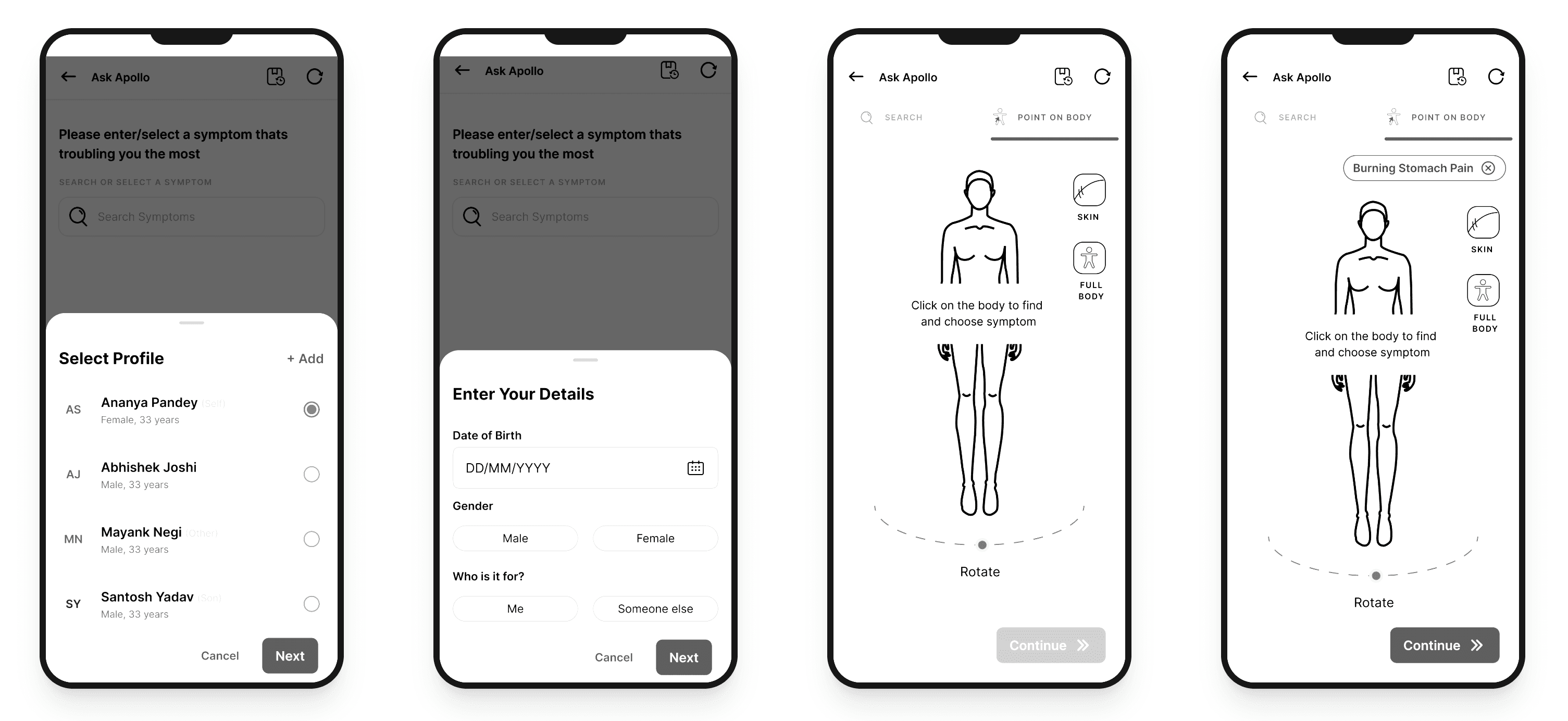
Profile selection
Healthcare decisions are often made for family members. To support this behavior, the experience begins by allowing users to select the profile of the person they are seeking care for.
The system adjusts symptom evaluation based on age and gender, ensuring clinically relevant diagnosis.
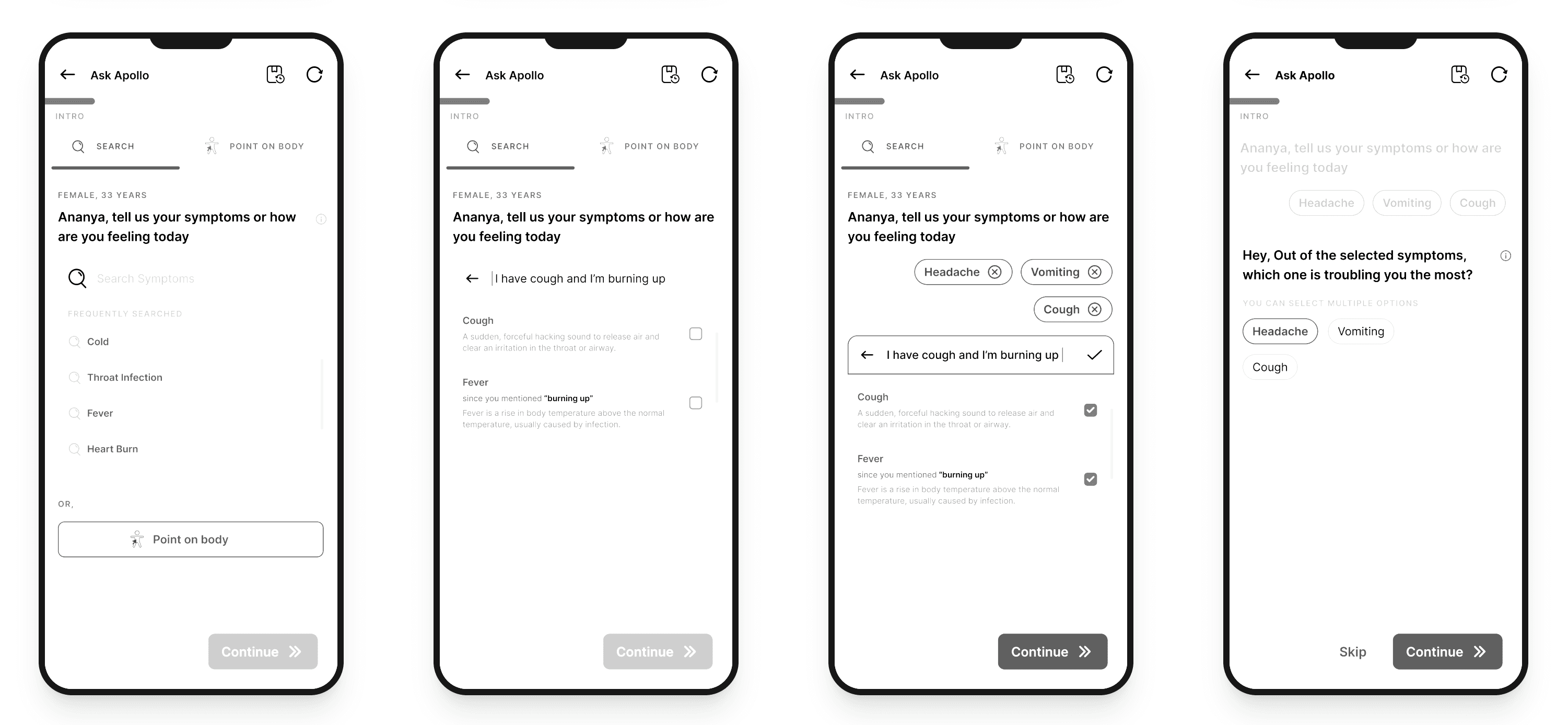
Symptom discovery
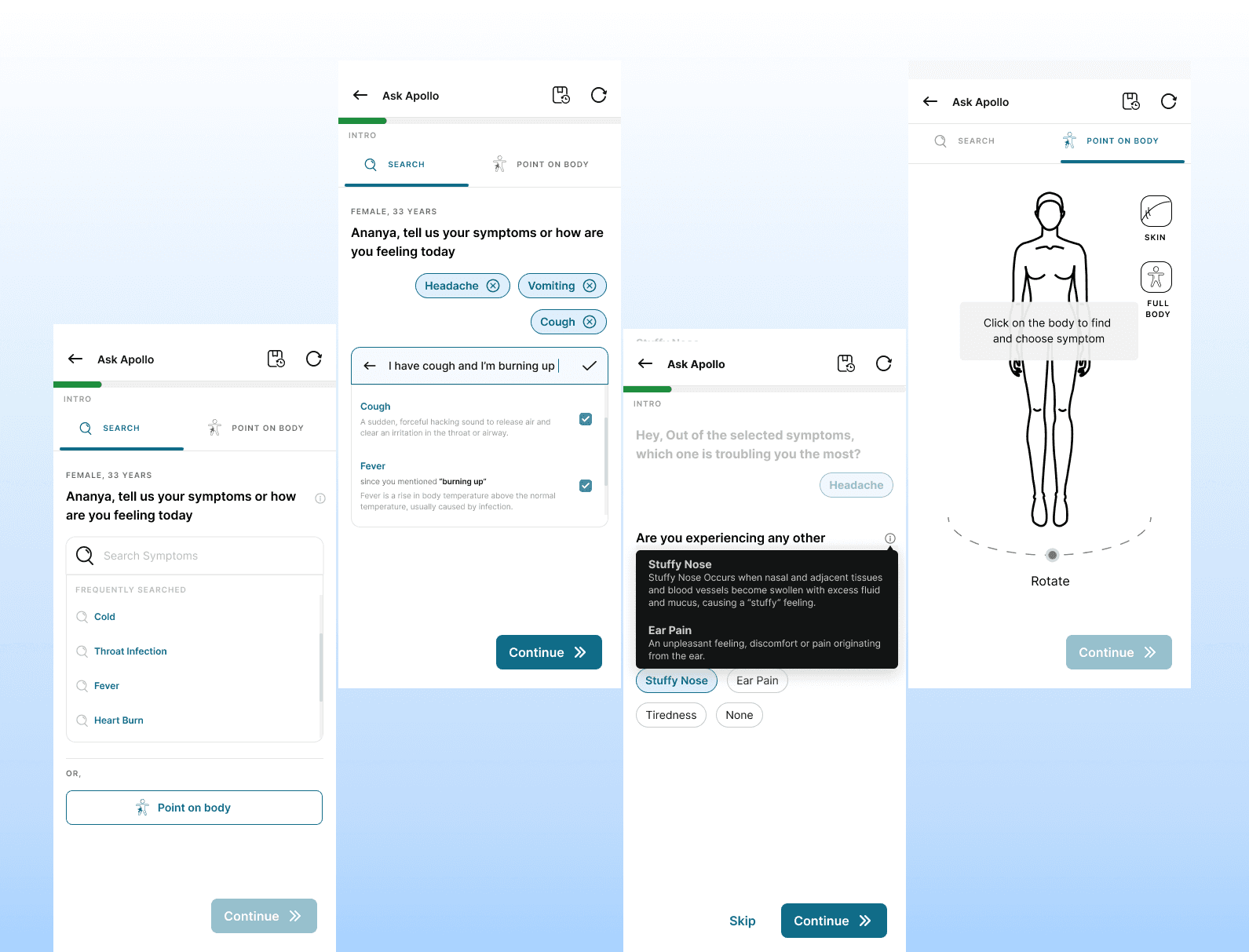
Users can search or select the symptom that is troubling them the most. This initiates the clinical evaluation.
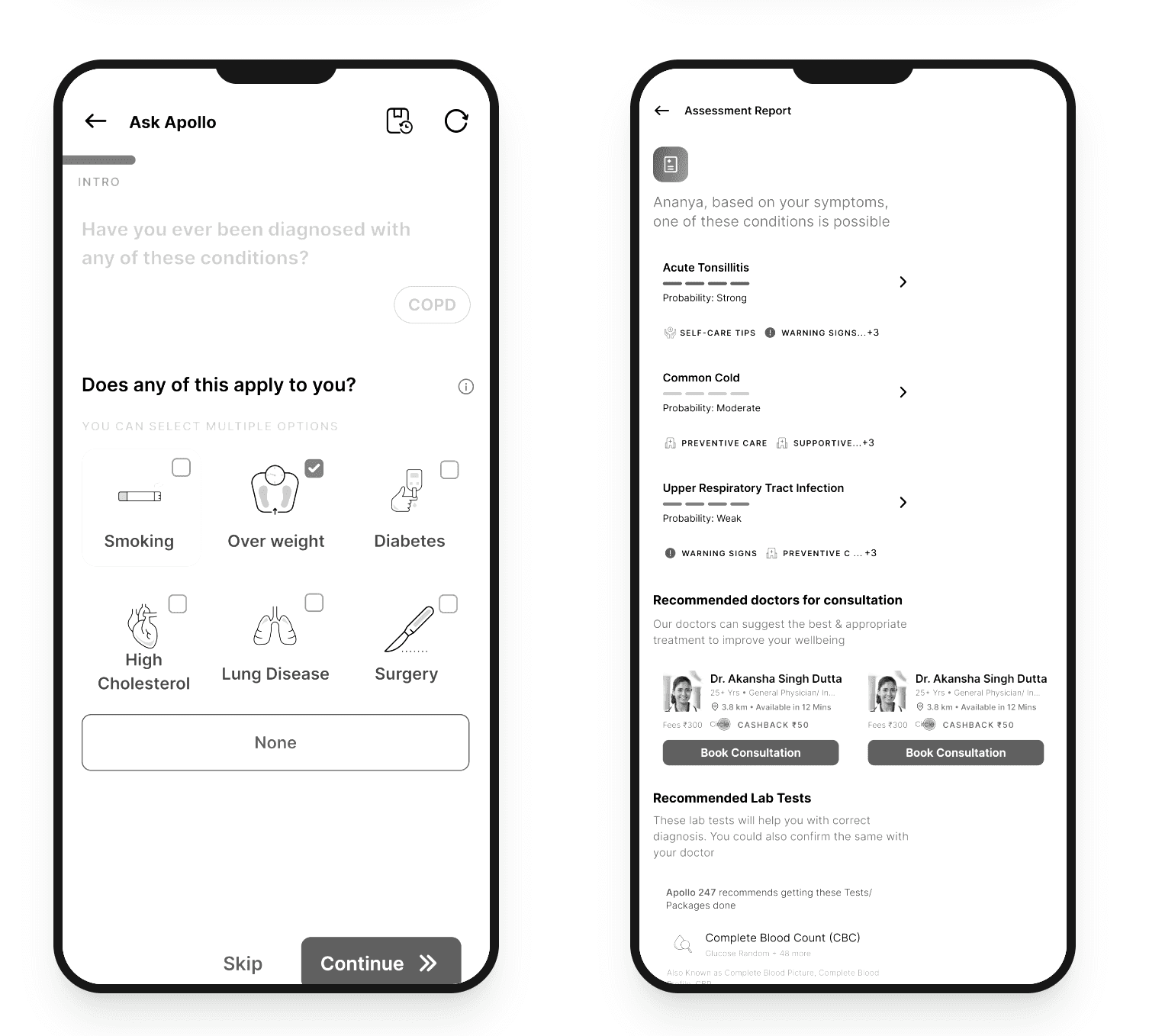
Diagnosis and care guidance
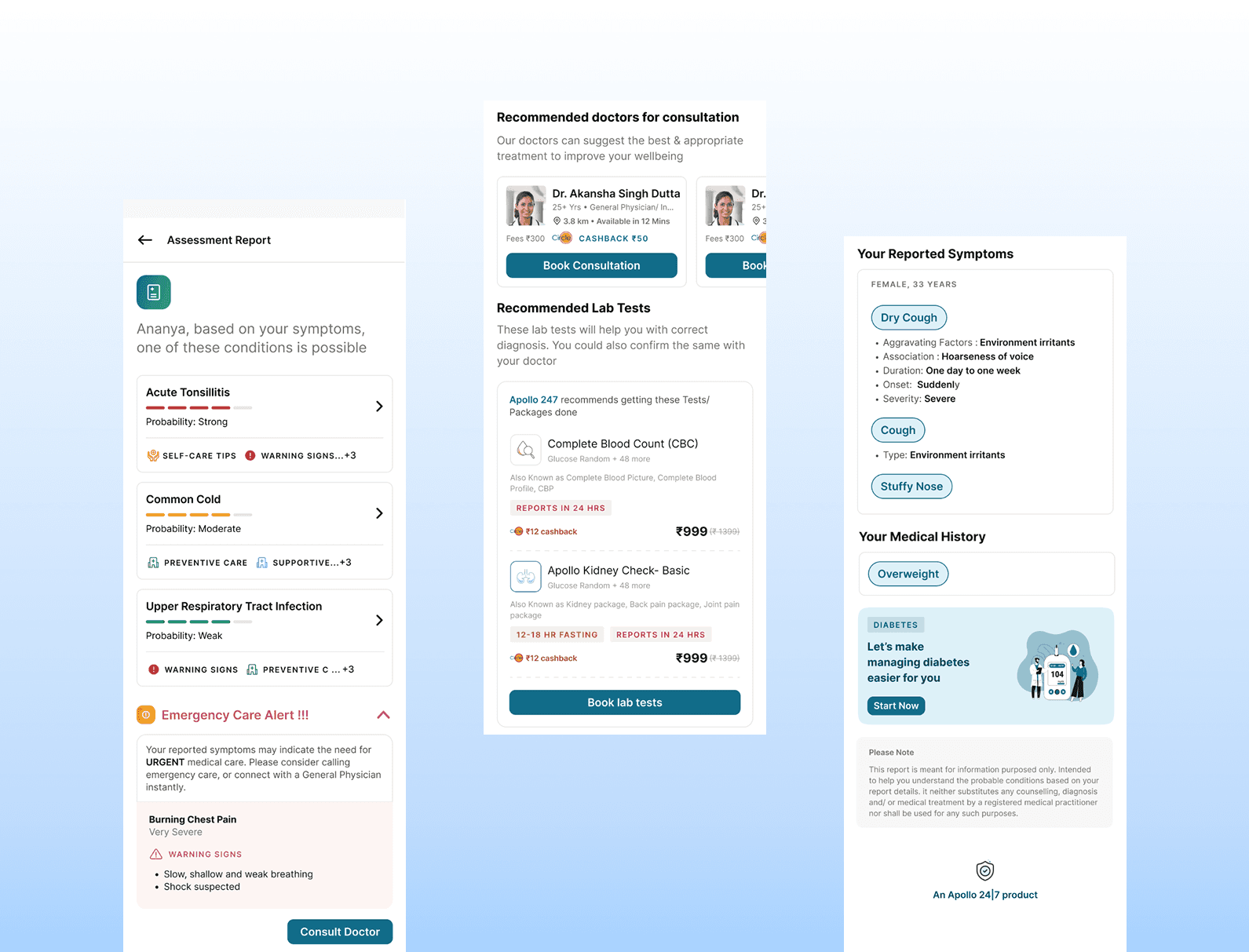
The system analyzes symptom combinations against the doctor-curated knowledge base to determine possible conditions and guide users toward the appropriate care.
Designing tools for doctors
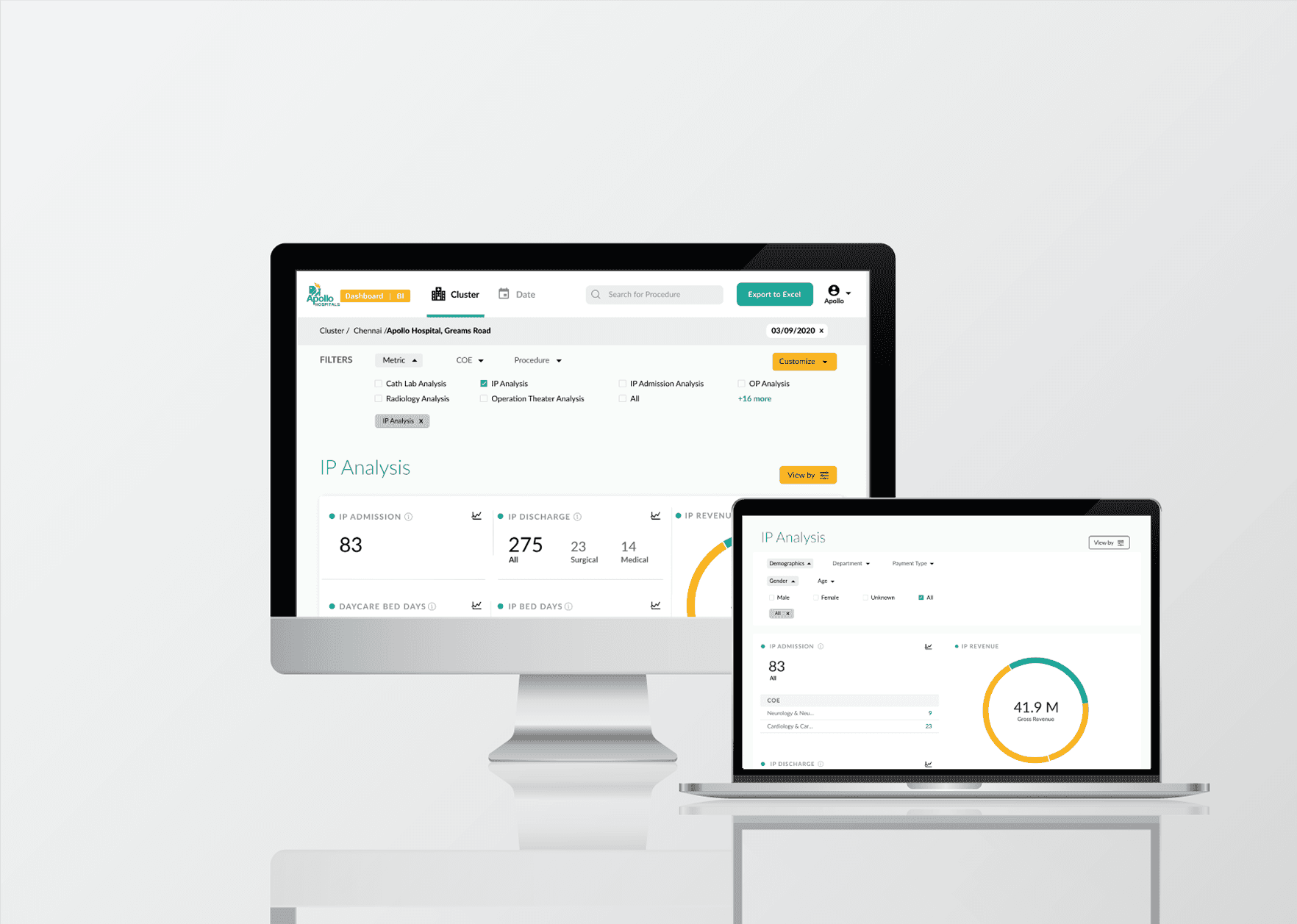
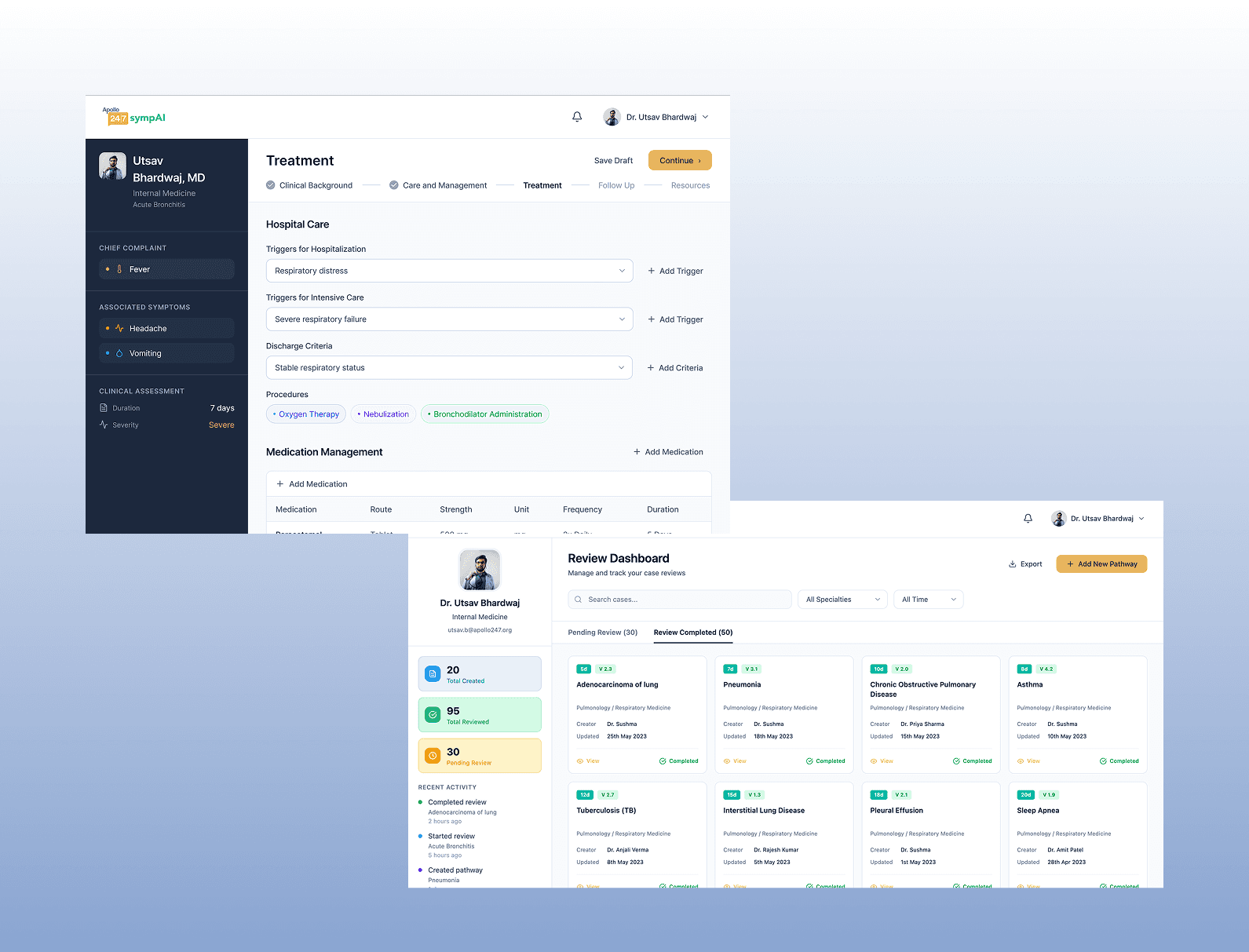
A key part of the platform was enabling doctors to create and maintain clinical knowledge.
We designed tools that allow doctors to:
• define medical conditions
• map related symptoms
• validate diagnosis pathways
• update clinical knowledge over time
Design explorations
During the design process we explored different interaction approaches to balance medical accuracy and usability.
Explorations included:
• guided questionnaires
• conversational symptom input
• structured symptom navigation
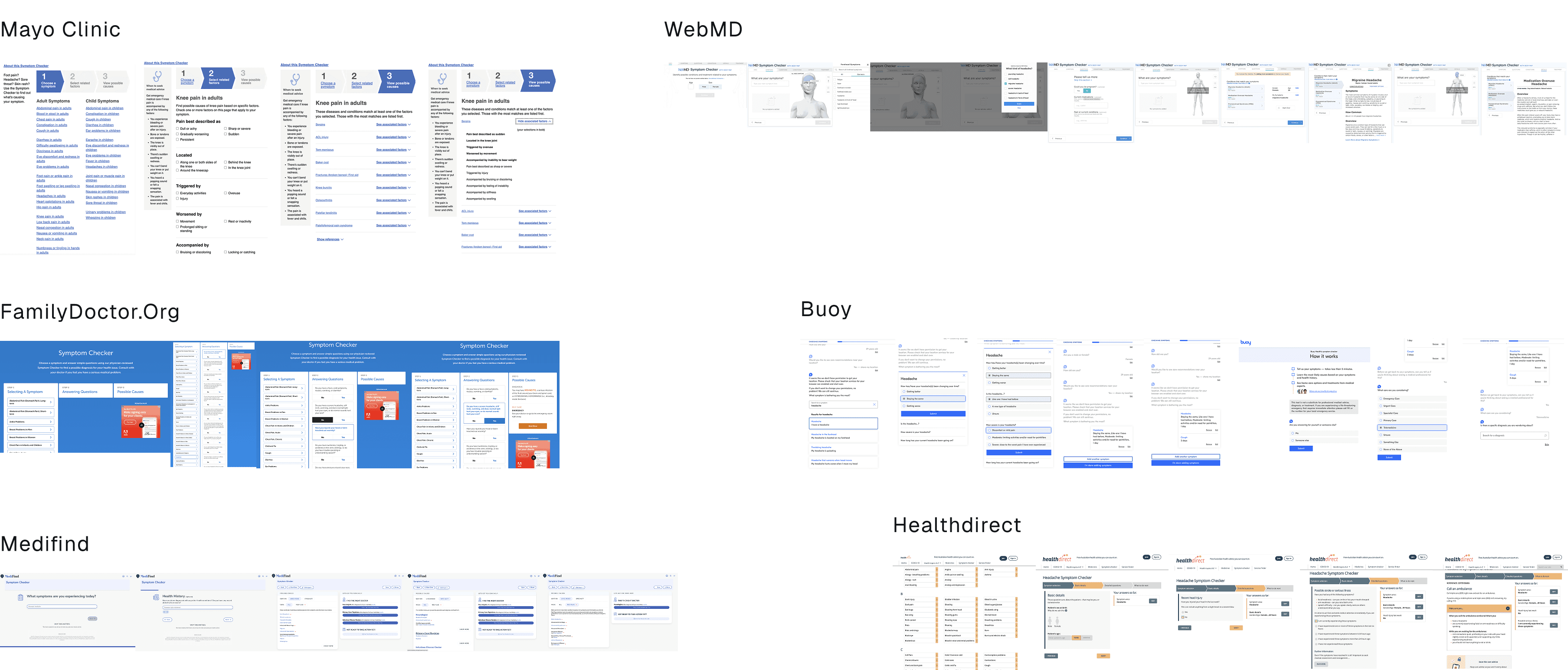
Moodboard
Wireframes
Impact
The Clinical Intelligence Engine became the foundation for Apollo’s AI-powered symptom checking experience.
Key outcomes:
• 1M+ symptom consultations monthly
• 30% increase in doctor consultations driven by the tool
• 3K+ doctors contributing to the knowledge base
• faster symptom understanding for users seeking care
The system transformed symptom discovery into a structured, clinically validated digital healthcare experience.